


In site leveling work, contractors often face a dilemma: the site is not large and the push distance is not long, but the earthwork volume is not small—must they switch to a larger bulldozer to get the job done? Switching to a larger machine means higher costs for transport, site entry, and machine-shift operation, and a small site may not provide enough room to maneuver; not switching raises concerns that efficiency will fall short. The core of this issue is not machine size, but the match among working space, push distance, and ground conditions.
First, look at the actual constraints of small-site leveling
A small site usually refers to an area with limited working-face width, short push distance, and possible surrounding buildings or road boundaries, such as scattered municipal plots, farmland improvement, and small material-yard stockpiling and leveling. The difficulty in such scenarios often lies not in the single-pass push volume, but in whether the machine can turn around and work close to edges within limited space, and in the crawler's trafficability on backfill soil or ground with relatively high moisture content.
If the site's own bearing conditions are ordinary, equipment with greater overall weight may instead increase sinking and travel resistance. Therefore, to determine whether a larger machine is needed, three questions must first be answered: whether the narrowest part of the working face can accommodate equipment turning and pushing; whether the single push distance is long enough to require larger blade capacity to reduce cycle time; and whether ground conditions can support the equipment weight.
The corresponding approach of compact crawler bulldozers
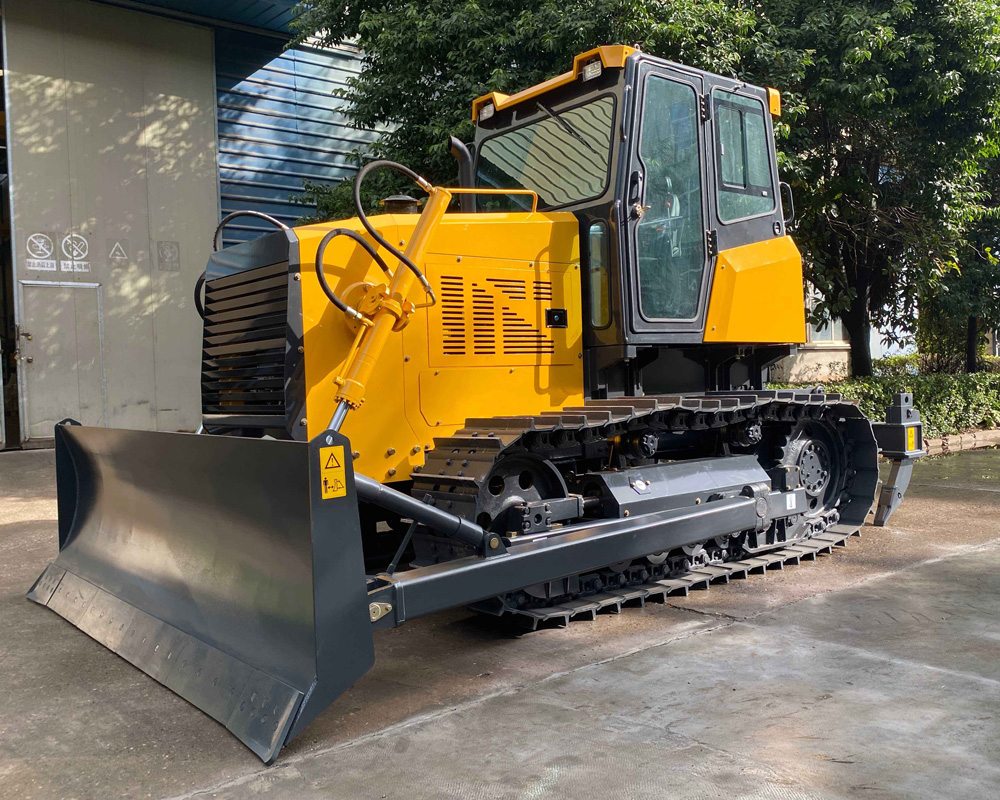
Under such constraints, a compact crawler bulldozer is an option worth considering. Taking this site's SD10 bulldozer as an example, its total machine weight is 10000kg, and its overall dimensions are 4400×2960×3030mm. It has a compact structure as described in the materials and is positioned for earthmoving, site leveling, and material handling tasks. This size class corresponds to sites with limited working space that do not require continuous heavy-load pushing by large equipment.
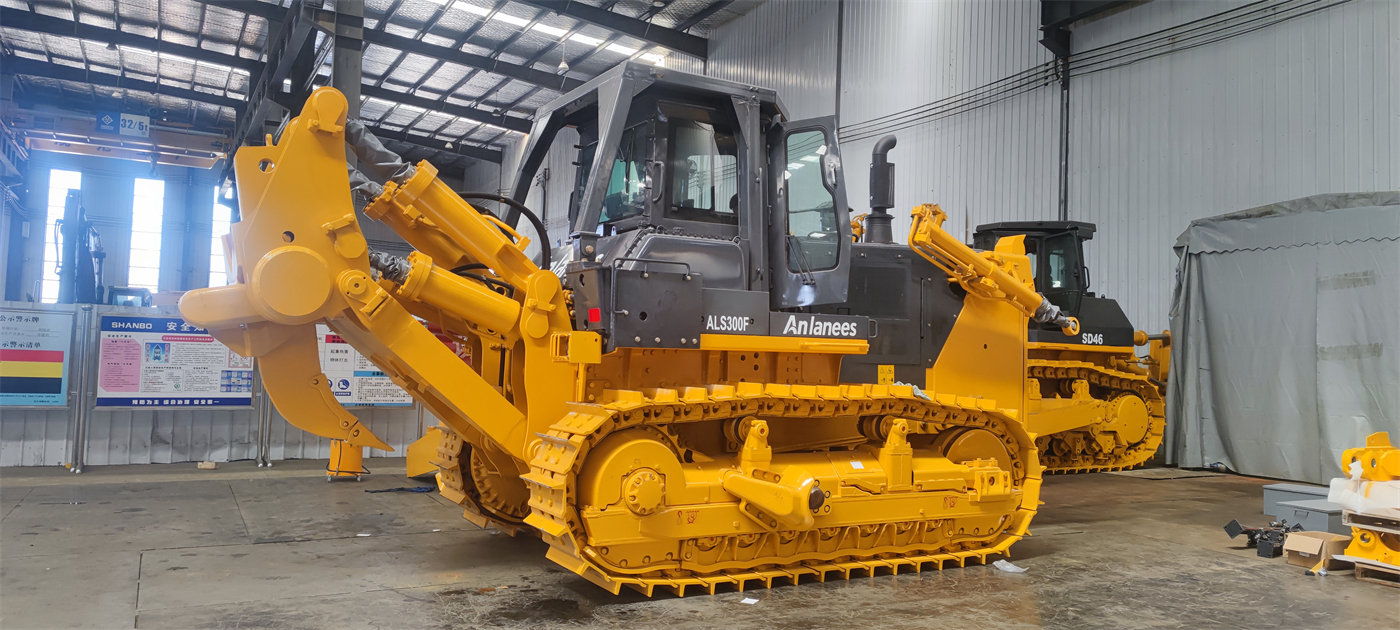
In terms of pushing capability, the SD10's maximum tractive force is 95kN. It is equipped with a Cummins 4BT3.9-C125 diesel engine, with rated power of 81kW (125HP)/2300r/min and maximum torque of 400N·m. These data indicate that it is intended for small- and medium-sized earthwork operations, not heavy-load pushing in mines. For small-site leveling, whether the power is sufficient must be judged in combination with soil type, push distance, and shift arrangements; conclusions should not be drawn from power figures alone.
Blade and ground conditions
The SD10's blade dimensions are 2960×960mm, with a maximum lift height of 830mm and a maximum digging depth of 350mm. Straight, curved, and coal blades are available. In site leveling, blade width and lift height affect the convenience of spreading and backfill leveling; digging depth relates to whether the machine can cut into hard surface layers. It should be noted that the materials do not provide actual pushing efficiency under different soil types, so the material type and moisture content should be confirmed with the manufacturer before purchase.
Regarding ground trafficability, the SD10's track shoe width is 450mm, and its ground contact pressure is 54.4kPa. This value can help assess the risk of sinking on soft ground, but ground contact pressure is only one basis for selection and cannot alone determine applicability. For backfill areas and wet, soft sites, the actual ground bearing capacity and moisture content should also be confirmed.
Operating conditions when space is limited
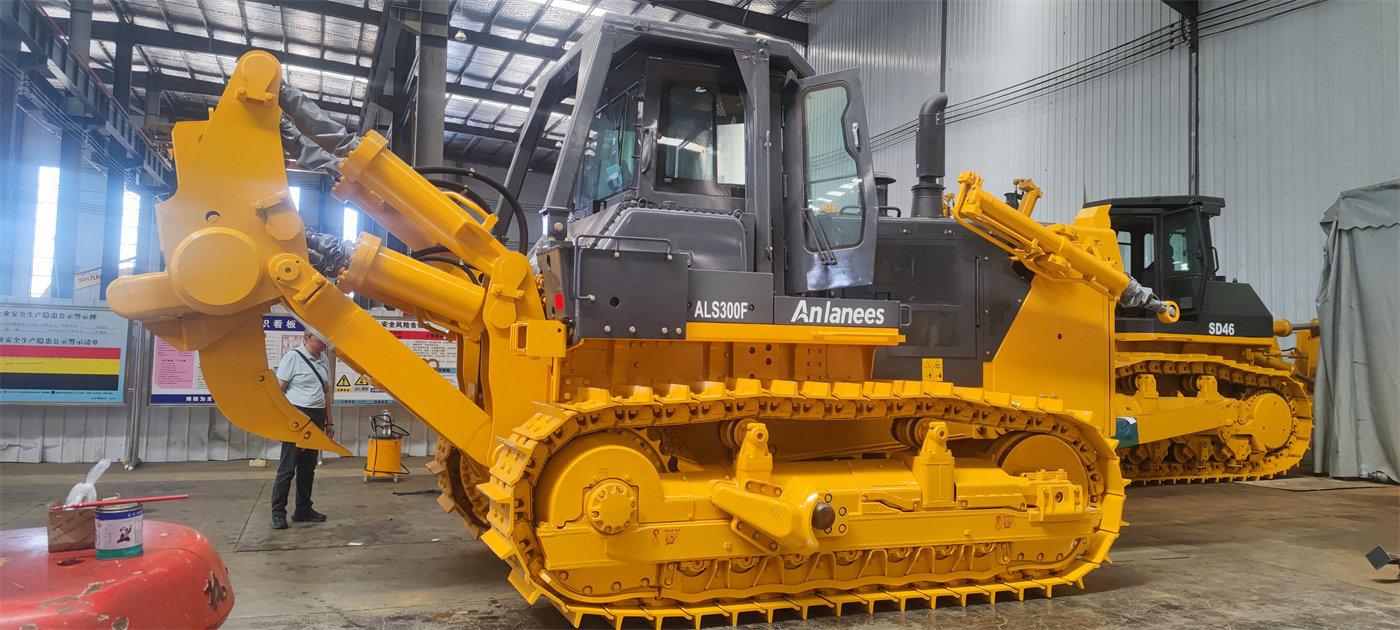
The materials mention that the SD10's compact dimensions allow flexible operation in narrow building spaces. For small-site leveling, this characteristic corresponds to edge-adjacent pushing, short-distance turning, and equipment layout within a limited working face. However, the specific lower limit of "narrow space" is not quantified in the materials, and whether it can meet the needs of a particular site still needs to be checked against the site's plan dimensions and obstacle locations.
Under what conditions there is no need to rush to switch to a larger machine
Based on the above materials, the following conditions can serve as references for deciding not to upgrade to a larger machine for the time being; all must be subject to on-site verification:
- The working-face width is limited, making turning and pushing layout difficult for large equipment;
- The single push distance is short, and blade capacity is not the main bottleneck;
- The ground is conventional hard soil or backfill soil, and ground contact pressure is within an acceptable range;
- The earthwork mainly consists of internal spreading, leveling, and short-distance transfer rather than continuous heavy-load pushing.
Conversely, if the site is open, the push distance is long, the earthwork volume is large, and continuous high-intensity operation is required, the cycle time and blade capacity of compact equipment may become limiting factors; only then is it necessary to evaluate larger-class equipment. This article makes no model recommendations on this point because the materials cover only one product, the SD10.
Boundary conditions to verify before purchase
Some information in the SD10 materials requires further confirmation and cannot be directly treated as applicable conclusions:
- Actual pushing efficiency and fuel consumption under different soil types and moisture contents;
- The specific minimum dimensions for operation in narrow spaces;
- The matching relationship between optional blades and rippers and specific operations;
- Restrictions imposed by transport method and site-access roads on overall machine dimensions and weight;
- Whether local emission requirements are consistent with the engine configuration.
These items are not fully covered in the materials. It is recommended to confirm them one by one with the manufacturer or dealer during the inquiry stage, and not to judge solely on the basis of sample parameters.
Work information to provide when requesting a quotation
To ensure that the equipment configuration matches the site conditions, the following can be provided during inquiry: material type and moisture content, site plan dimensions and narrowest passage, single push distance, daily workload and shifts, ground bearing conditions, whether ripping or towing work is required, and transport and site-access conditions. This information is more helpful than simply asking "what horsepower is suitable" in enabling the other party to give a well-founded configuration recommendation.